

Family conflict, poor communication, and unclear boundaries can push men in recovery toward relapse. Research shows that recovery capital, structured support like stable housing, employment help, and clear household rules, protects against relapse far more than general encouragement alone.
This article explains how family dynamics shape relapse risk for adult men in Atlanta and what families can do to support lasting recovery.
Family Conflict Raises Relapse Risk
Family conflict acts as a powerful stressor that can trigger relapse among men recovering from alcohol use disorder. During the COVID-19 pandemic, hospital admissions for AUD increased significantly, with men facing higher odds than women and divorced men showing more than double the risk compared to married men. This pattern suggests that family disruption and ongoing conflict create conditions that elevate relapse vulnerability.
The mechanism is straightforward. High levels of criticism, hostility, and emotional overinvolvement from family members, collectively known as expressed emotion, increase stress, lower self-efficacy, and intensify cravings. When family members blame the person for their addiction or express contempt, it creates a climate of shame and anger that makes recovery harder to sustain.
Research on family caregivers shows that emotion dysregulation and problematic family functioning amplify the impact of stress on burden and distress. For men in recovery, this translates to a higher likelihood of turning back to alcohol when family interactions are volatile or critical.
The Role of Expressed Emotion
Expressed emotion comprises three components: criticism, hostility, and emotional overinvolvement. Among caregivers of adults with alcohol dependence, perceived criticism tends to dominate the emotional climate. This pattern likely perpetuates relapse by creating a feedback loop where criticism triggers defensiveness, conflict escalates, and the recovering person withdraws or seeks relief through drinking.
Families often attribute substance use to personal failings rather than recognizing it as a chronic condition influenced by biology, stress, and environment. These causal attributions shape how family members respond. When relatives believe the person could simply choose to stop, they express more criticism and hostility, which in turn predicts higher relapse rates.
General Support is Not Enough
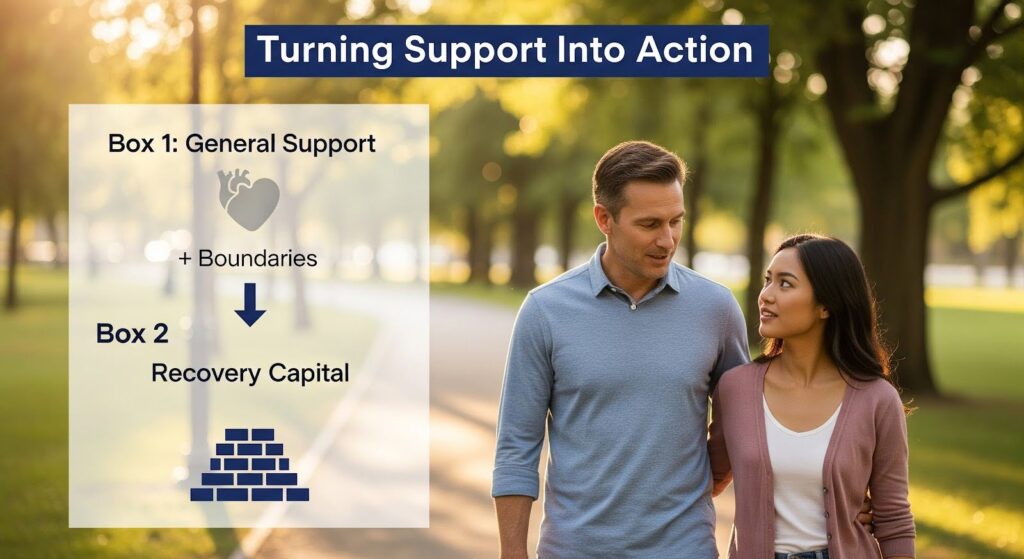
Many families assume that simply being supportive will prevent relapse. The evidence tells a different story. A national survey of adults with resolved alcohol use disorder found that general social support showed no independent protective effect once recovery-specific resources were accounted for. What mattered was recovery capital: tangible supports like stable housing, employment, health care access, and structured routines aligned with sobriety.
This distinction is critical for Atlanta families. Encouragement and empathy are valuable, but they do not reduce relapse risk unless they translate into concrete actions. Families that remove alcohol from the home, help coordinate treatment appointments, support job searches, and establish clear household rules create the structure that protects recovery.
The same study found that early recovery, the first year after stopping heavy drinking, carried substantially higher relapse risk. For men in this vulnerable window, recovery capital was robustly protective for both women and men, while broad social support was not. This underscores the need for families to focus on building specific, actionable supports rather than relying on goodwill alone.
What Recovery Capital Looks Like in Practice
Recovery capital includes:
- Alcohol-free housing arrangements
- Support for employment or re-employment, including transportation and flexible schedules
- Coordination with medical and behavioral health care
- Structured daily routines for sleep, meals, and exercise
- Purpose-building activities like volunteering or mentoring
Each of these elements can be strengthened through family boundary practices. For example, a family might agree that no alcohol will be kept in the home, establish a shared calendar for treatment appointments, or set aside time each week to review progress and challenges together.
Boundaries Protect Recovery
Boundaries are explicit, agreed-upon household rules and contingencies that protect sobriety. They are not punitive; they are scaffolding that reduces ambiguity, limits exposure to triggers, and creates predictable responses to stress. For adult men, especially those with impulsivity or externalizing traits, boundaries lower the chance of drift into avoidant behaviors and drinking as a coping mechanism.
Examples of effective recovery boundaries include:
- No alcohol kept or consumed in the home
- Financial transparency, such as shared oversight of spending during early recovery
- Time-bound commitments to treatment participation and peer support attendance
- Pre-agreed response plans for lapses, including who to call and what steps to take
- Role clarity so each family member knows which elements of support they are responsible for
Research shows that recovery capital, which includes these structured supports, is what predicts lower relapse risk, not diffuse social support. Boundaries operationalize support into behaviors that actively protect sobriety.
Enforcing Boundaries Without Escalating Conflict
Boundaries can generate short-term friction, especially in families with a history of conflict or enabling dynamics. To manage this, families should use collaborative boundary-setting: involve the recovering man in co-creating rules and contingencies. Pairing boundaries with emotion regulation skills for all parties lowers the chance that enforcement escalates into conflict.
For men in early recovery, families should set more intensive boundaries and gradually relax them as stability increases. This graduated approach mirrors the pattern that relapse odds fall with recovery length.
Biological Susceptibility and Family History Matter
Not all men face the same level of relapse risk. Research from the Collaborative Study on the Genetics of Alcoholism shows that biological susceptibility, including polygenic risk for problematic alcohol use and neurophysiological markers, can moderate the impact of stressors on drinking behavior. Among individuals with a lifetime alcohol use disorder who had current symptoms before the pandemic, 14% reported increased drunkenness since March 2020, compared to 5% in those without an AUD history.
This means that men with higher genetic liability or strong family histories of addiction may be more sensitive to stress and family conflict. For these men, family environments that provide high structure, strict alcohol-free homes, intensive treatment linkage, and detailed crisis protocols, are especially important from the outset.
The COGA family-based design allows researchers to separate genetic effects from environmental influences, clarifying that both genes and family context shape risk. Families with multigenerational AUD liability may need proactive boundary-setting and resource-building even when current stressors appear manageable, given latent vulnerability.
Personalizing Support to Individual Risk
For adult men in Atlanta who exhibit strong externalizing traits or have known familial AUD liability, clinicians should recommend a high-structure family plan that includes:
- Strict alcohol-free environments
- Intensive treatment linkage with weekly check-ins
- Detailed crisis protocols and lapse-response plans
- Rapid connection to employment and housing supports
This approach is mechanistically grounded in the evidence that biological factors moderate stress effects on drinking, and that structured family supports can buffer those risks.
Demographic Risk Clusters in Atlanta
Certain demographic patterns signal elevated relapse risk. Divorced patients had higher odds of AUD admissions compared to married patients during the pandemic, likely reflecting a mix of stress, reduced social control, and potential loss of shared routines and resources. For Atlanta men, clinicians should screen for marital disruption and implement intensified boundary-setting. Single-person households may require substitutes for family-based boundary supports, such as sober living or recovery residences.
Early recovery, the first year after stopping heavy drinking, is a window of heightened risk. For urban men with additional stressors like job instability or caregiving responsibilities, early recovery boundary structures should be prioritized.
Economic stressors were common during the pandemic. Linking men to unemployment benefits and employment services rapidly can be part of recovery capital-building, easing the family’s stress load and reducing conflict over finances. Georgia’s unemployment benefits infrastructure is a contextual factor in mitigation.
Couple and Family Therapy Improves Outcomes
The strongest evidence for reducing relapse risk comes from couple and family-involved treatments. Behavioral Couples Therapy and Alcohol-focused Behavioral Couple Therapy have been shown in multiple randomized controlled trials to improve both substance use outcomes and relationship functioning compared to individually oriented treatment.
These therapies work by targeting key levers: communication, contingency management, dyadic support, and relapse planning. They reduce expressed emotion by teaching families how to give feedback in specific, behavioral, and respectful ways rather than through criticism and blame. They also help couples develop shared reinforcement strategies, aligning rewards with recovery milestones and creating agreed-upon boundaries.
Alcohol-focused Behavioral Couple Therapy has been associated with reductions in partner violence, favorable cost outcomes, and broader dissemination potential. For men in Atlanta, access to these evidence-based couple therapies should be a standard option in addiction programs.
Significant-Other Involvement Strategies
Significant-other involvement approaches, such as Community Reinforcement and Family Training, aim to activate family members as catalysts of treatment entry and adherence. Research shows these strategies increase treatment initiation approximately threefold, though effects on substance use and family functioning are not always superior to other family interventions.
These models are particularly useful in the earlier stages of the help-seeking continuum, improving engagement and continuity of care. They complement, rather than replace, skills-based couple therapy.

Practical Steps for Atlanta Families
Families can take concrete actions to reduce relapse risk for adult men in recovery:
Screen for relational risk. Use brief measures of criticism, emotional involvement, and relationship satisfaction to identify areas of concern. Assess safety, including intimate partner violence and coercive control, and include safety planning where indicated.
Set clear boundaries collaboratively. Involve the recovering man in co-creating household rules and contingencies. Examples include no alcohol in the home, financial transparency, and pre-agreed response plans for lapses.
Build recovery capital. Focus on tangible supports like stable housing, employment assistance, treatment coordination, and structured routines. These recovery-specific resources are what protect against relapse.
Teach emotion regulation skills. All family members benefit from learning how to manage distress, label emotions, and de-escalate conflicts. This reduces the chance that boundary enforcement escalates into criticism and hostility.
Intensify support during early recovery. The first year carries the highest risk. Families should set more intensive boundaries and check-ins during this period, gradually relaxing them as stability increases.
Connect to social supports. Isolation magnifies harm. Families should seek peer support, psychoeducation groups, and navigation assistance to reduce the burden and uncertainty that can fuel high expressed emotion.
Why it Matters?
Family dynamics are not peripheral to recovery; they are central drivers of relapse risk and recovery outcomes.
For adult men in Atlanta, structured, recovery-specific family supports and clear household boundaries are likely to reduce relapse risk, especially during early recovery and in contexts of elevated stress. Programs that integrate family boundary-setting, emotion regulation skills, and targeted enhancement of recovery capital are poised to yield the greatest returns.
The evidence is clear: families that convert goodwill into concrete, structured supports, alcohol-free homes, financial transparency, routine treatment engagement, and explicit lapse-response plans, create the conditions for lasting recovery.
General encouragement is not enough. What matters is the quality and specificity of support, the presence of clear and consistent boundaries, conflict regulation, and alignment of family behavior with recovery goals.
For men with elevated genetic liability, strong family histories of addiction, or high externalizing traits, high-structure family plans are essential from the outset.
For men experiencing marital disruption or economic stress, intensified boundary-setting and rapid linkage to employment and housing supports can mitigate risk.
Atlanta health systems and community providers should adopt family-inclusive, boundary-focused relapse prevention that includes rapid recovery capital linkage, boundary-setting interventions, and emotion regulation training, with intensified supports during the first six to twelve months post-treatment.
This approach is mechanistically grounded, empirically supported, and implementable within existing service structures.
If you or a loved one is navigating recovery in Atlanta, consider reaching out to a program that integrates family support and structured care. MARR’s therapeutic community offers a high-accountability, family-inclusive approach that has helped thousands of men build lasting recovery over nearly 50 years.
