

The hours and weeks after a nonfatal overdose are some of the most dangerous a person will ever face. For overdose survivors in Atlanta, leaving the emergency room (ER) does not mean the risk is over.
In fact, research shows this short window after discharge carries an unusually high chance of relapse, repeat overdose, and death. At the same time, it is one of the strongest opportunities to start treatment that saves lives.
This article explains what actually happens to overdose survivors in Atlanta after ER discharge.
Using only published research and Atlanta‑specific program data, we break down ER discharge overdose outcomes in Atlanta, what post‑overdose care looks like today, where gaps remain, and what evidence shows works best for survival and recovery.
Why the Period After an Overdose is So Dangerous?
The weeks following an overdose are a high‑risk window when people leave the ER or detox fragile, unstable, and often without consistent follow‑up care. Changes in tolerance, untreated mental health needs, and gaps in support make this period uniquely dangerous for repeat overdose and death:
The Immediate Risk After ER Discharge
Studies consistently show that the time right after an ER visit for overdose is extremely risky. A 2025 multi‑site emergency department study found that overdose deaths cluster in the days and weeks following ER discharge, not months later. This makes discharge planning a critical moment, not a routine handoff.
In Atlanta, this risk is shaped by fentanyl’s presence in the drug supply. Even small amounts can be lethal, especially for people whose tolerance has dropped after an overdose or brief abstinence. Without treatment or medication support, many survivors return to use quickly, often with fatal results.
Researchers emphasize that the ER visit itself is not the problem. The danger comes when patients leave without medication, follow‑up appointments, or navigation support. This pattern explains why post‑overdose care in Atlanta has become a public health priority.
Loss of Tolerance After Detox or Abstinence
Another well‑documented risk is reduced tolerance. After detox or even short periods without opioids, the body becomes more sensitive. If a person returns to prior doses, overdose risk rises sharply.
A large cohort study summarized by the Recovery Research Institute showed that people who received no treatment after detox had much higher death rates within 12 months than those who received medication. Medication for opioid use disorder, often called MOUD, offered the strongest protection against death.
This evidence matters because many overdose survivors experience short forced abstinence in hospitals or jails. Without medication at discharge, that loss of tolerance becomes deadly.
What Evidence Shows Works After an Overdose?
What evidence shows works after an overdose focuses on what actually keeps people alive and out of the ER once a crisis has occurred. Strong research supports ED‑initiated buprenorphine, peer recovery and warm handoffs, and sustained medication treatment as core elements of an effective post‑overdose care pathway:
ED‑Initiated Buprenorphine Saves Lives
The strongest evidence supports starting medication directly in the ER. A landmark randomized clinical trial found that patients who received ED‑initiated buprenorphine were far more likely to be in treatment 30 days later than those who received referral alone.
> 78% of patients who started buprenorphine in the ER were engaged in treatment at 30 days, compared with 37% who only received a referral.
Later evidence syntheses confirmed these findings. Real‑world programs show roughly a six‑fold increase in short‑term treatment engagement when buprenorphine starts in the ER. Importantly, safety concerns are low. Precipitated withdrawal occurs in fewer than 1% of cases when standard protocols are used.
In Atlanta, this evidence underpins the most effective ER discharge overdose outcomes.
Peer Recovery Coaches and Warm Handoffs
Medication works best when paired with human support. Peer recovery coaches, often people with lived experience, help overdose survivors accept care and navigate next steps. Research on Atlanta programs shows acceptance rates between 82% and 88% when peers engage patients in the ER.
Peers do several critical things:
- Build trust at a vulnerable moment
- Schedule follow‑up appointments before discharge
- Help with transportation, insurance, and logistics
- Stay in contact after discharge
Studies on peer programs show they increase linkage to care, especially when combined with medication and rapid follow‑up. Alone, peers help. Together with buprenorphine, they help far more.
Medication Reduces Mortality Long Term
Evidence from a large post‑detox cohort shows that medication for opioid use disorder sharply reduces death rates over 12 months. The lowest mortality occurred among people receiving medication, either alone or combined with residential treatment.
Crucially, medication continued to protect people even during the high‑risk month after treatment stopped. Residential treatment alone did not offer the same protection. This finding reinforces why medication access after ER discharge is central to Atlanta overdose follow‑up strategies.
Post‑Overdose Care in Atlanta: What Exists Today?
Post-overdose care in Atlanta: what exists today reflects a patchwork of hospital-based programs, peer navigation, and limited community follow-up. Understanding how Grady’s LINCS UP initiative and emerging Emory partnerships currently function helps identify gaps and guide the next wave of coordinated, citywide improvements:
Grady Memorial Hospital’s LINCS UP Program
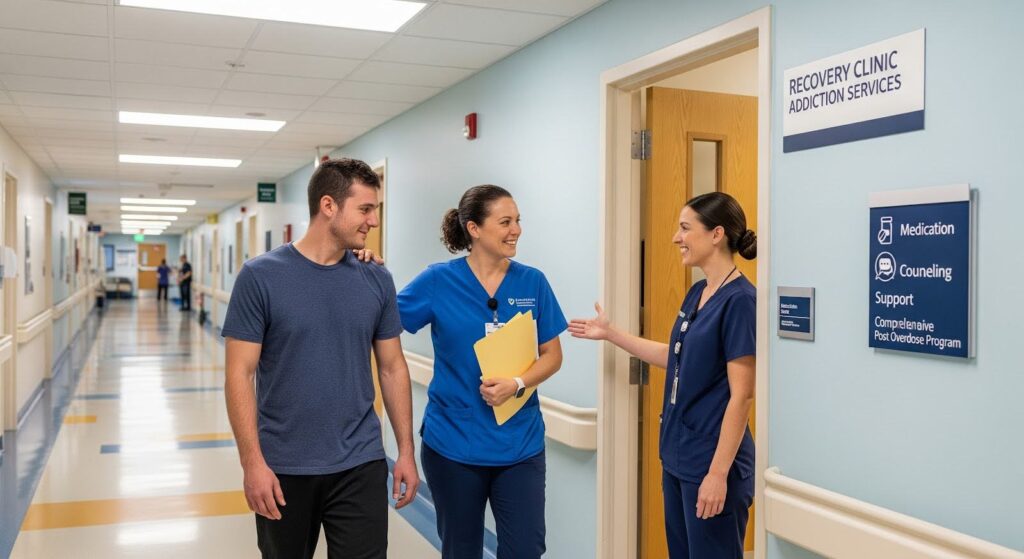
Atlanta’s strongest example of post‑overdose care is at Grady Memorial Hospital. Grady operates a comprehensive ER linkage system that includes:
- Peer recovery coaches in the ER and inpatient units
- 24/7 addiction medicine consultation
- ED‑initiated buprenorphine
- Warm handoffs to follow‑up clinics
- No‑cost outpatient medication for uninsured patients
According to program reports summarized by MARR’s analysis of Atlanta ER overdose follow‑up, Grady’s program sees about 90 patients per month and maintains high acceptance of peer support.
Between April 2023 and July 2025, more than 700 patients were directly placed into residential treatment through this system. These numbers show capacity and effectiveness when evidence‑based care is available.
Expansion Through Emory Partnerships
Emory Emergency Medicine supports Grady’s addiction consult services and has expanded peer recovery services to other sites, including Emory Midtown. Funding from opioid settlement dollars has helped sustain and grow these programs.
These expansions demonstrate that Atlanta has the clinical knowledge and infrastructure to deliver strong post‑overdose care. The challenge is that access remains uneven across hospitals.
The Engagement Gap Across Atlanta Hospitals
The engagement gap across Atlanta hospitals reflects how rarely overdose survivors transition into sustained addiction care after emergency treatment. Understanding who falls through the cracks and why is essential for redesigning hospital pathways and community partnerships that actually connect patients to ongoing help:
Most Overdose Survivors Do Not Enter Treatment
Despite strong programs at Grady, research indicates that most overdose survivors in Atlanta do not enter treatment within 30 days of ER discharge. This reflects national patterns.
Studies summarized in Atlanta program reports show:
- Hospitals without ED‑initiated medication often see under 10% treatment engagement at 30 days
- Hospitals using peers and ED‑initiated buprenorphine reach 15–30% engagement
Atlanta likely sits between these ranges, depending on where a patient receives care. This means survival can depend on which hospital door someone enters.
Structural Barriers Remain
Several barriers explain the gap:
- Uneven adoption of ED‑initiated buprenorphine
- Limited access to addiction consult services
- Pharmacy stocking and same‑day medication access problems
- Insurance and payer restrictions
A 2025 study found that eliminating the federal X‑waiver did not significantly increase post‑hospital buprenorphine prescribing on its own. This confirms that policy change alone does not fix implementation problems.
Disparities in ER Discharge Overdose Outcomes
Disparities in ER discharge overdose outcomes reveal who receives timely, protective care after a crisis and who is left at higher risk for repeat events. Understanding how these gaps cluster by race, ethnicity, and insurance status is essential for designing interventions that reduce avoidable harm and advance equity:
Racial, Ethnic, and Payer Differences
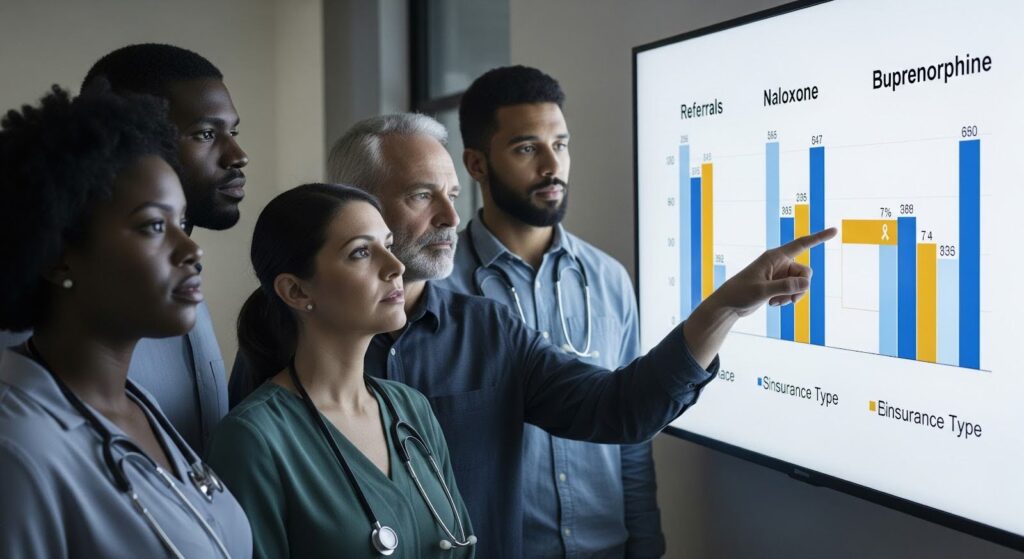
A multi‑site study of ER overdose patients from 2020–2023 examined differences in discharge practices by race, ethnicity, and other factors. The findings showed clear disparities in:
- Referrals to treatment
- Naloxone distribution
- Buprenorphine prescriptions at discharge
While the study did not publish Atlanta‑only estimates, its conclusions apply locally. Without standardized protocols, bias and inconsistency creep into care delivery.
Why Equity‑Focused Measurement Matters
Atlanta has tools to address this. Georgia’s OASIS public health surveillance system can stratify overdose data by race, ethnicity, sex, and geography. However, OASIS does not yet track whether individual overdose survivors start treatment after ER discharge.
Researchers propose linking ER data with insurance claims to publish hospital‑level follow‑up metrics. This would allow Atlanta to see where gaps exist and target resources where they are most needed.
How Atlanta Can Track Overdose Follow‑Up Better?
How Atlanta can track overdose follow‑up better depends on using its existing data systems to see who returns after an overdose and whether they receive timely care. Clear, public measures of 30‑day revisits and follow‑up can guide improvement efforts and keep agencies accountable:
Using Georgia’s Existing Data Systems
Georgia already publishes overdose ER visit and mortality data through OASIS drug overdose dashboards. In 2025, fentanyl became a selectable cause, improving accuracy.
What is missing is patient‑level follow‑up. Researchers propose:
- Defining a cohort of ER overdose visits
- Tracking 7‑ and 30‑day treatment initiation
- Measuring 90‑day repeat overdoses
- Measuring 12‑month mortality
This approach mirrors methods used successfully in other states and fits Georgia’s data infrastructure.
What Should Be Publicly Reported
Experts recommend that Atlanta publish:
- 7‑day and 30‑day medication initiation rates
- Any treatment engagement at 30 days
- Naloxone distribution at discharge
- Repeat overdose within 90 days
- Mortality within 12 months
All measures should be stratified by hospital and demographics. Transparency would drive improvement and accountability.
What This Means for Overdose Survivors in Atlanta?
What this means for overdose survivors in Atlanta is that their path after ER discharge can either move toward stability or deeper risk, depending on what supports are in place. The gap between best‑case and worst‑case scenarios highlights how critical it is to connect people quickly to treatment, housing help, and ongoing follow‑up care:
Best‑Case Scenario After ER Discharge
When evidence‑based care is in place, overdose survivors in Atlanta may leave the ER with:
- Buprenorphine started the same day
- Naloxone for overdose reversal
- A scheduled follow‑up appointment within 72 hours
- Support from a peer recovery coach
- Continued access to medication, even if uninsured
Research shows this pathway greatly improves survival and treatment engagement.
Worst‑Case Scenario Without These Supports
Without these supports, many survivors leave with only a referral list. Evidence shows this approach leads to:
- Low treatment entry rates
- High relapse risk
- Higher mortality in the weeks after discharge
The contrast between these outcomes is why ER discharge practices matter so much.
Key Takeaways on Atlanta Overdose Follow‑Up
Atlanta has already proven that effective post‑overdose care works. Programs at Grady Memorial Hospital show that ED‑initiated buprenorphine, peer recovery coaching, and warm handoffs can dramatically improve outcomes. The research is clear that medication reduces deaths and that delays cost lives.
At the same time, most overdose survivors in Atlanta still do not receive this level of care after ER discharge. The difference often depends on hospital resources, not patient needs. By standardizing care and publishing clear follow‑up metrics, Atlanta could close this gap.
For overdose survivors in Atlanta, what happens after the ER can mean the difference between recovery and another overdose. The evidence shows exactly what works. The remaining challenge is making sure every hospital delivers it.
